


A roadmap for responsible AI
Tech firms like Lenovo are pledging to ensure that AI development is safe and secure
“A computer can never be held accountable,” an IBM training manual warned in 1979. “Therefore a computer must never make a management decision.” The idea that only humans are responsible for a machine’s output was a radical one, then and now. Mitigating risks, preventing harm, and creating accountability mechanisms should be an integral part of developing any new product. But the relentless pace and pressure of the technology industry has all too often favoured moving fast and breaking things. With the advent of powerful generative artificial intelligence (AI) tools intrinsically prone to “hallucination,” firms have an ethical—and business—imperative to slow down and fix them. Call it “responsible AI.”
Subheader lorem ipsum dolor sit amet consectetur
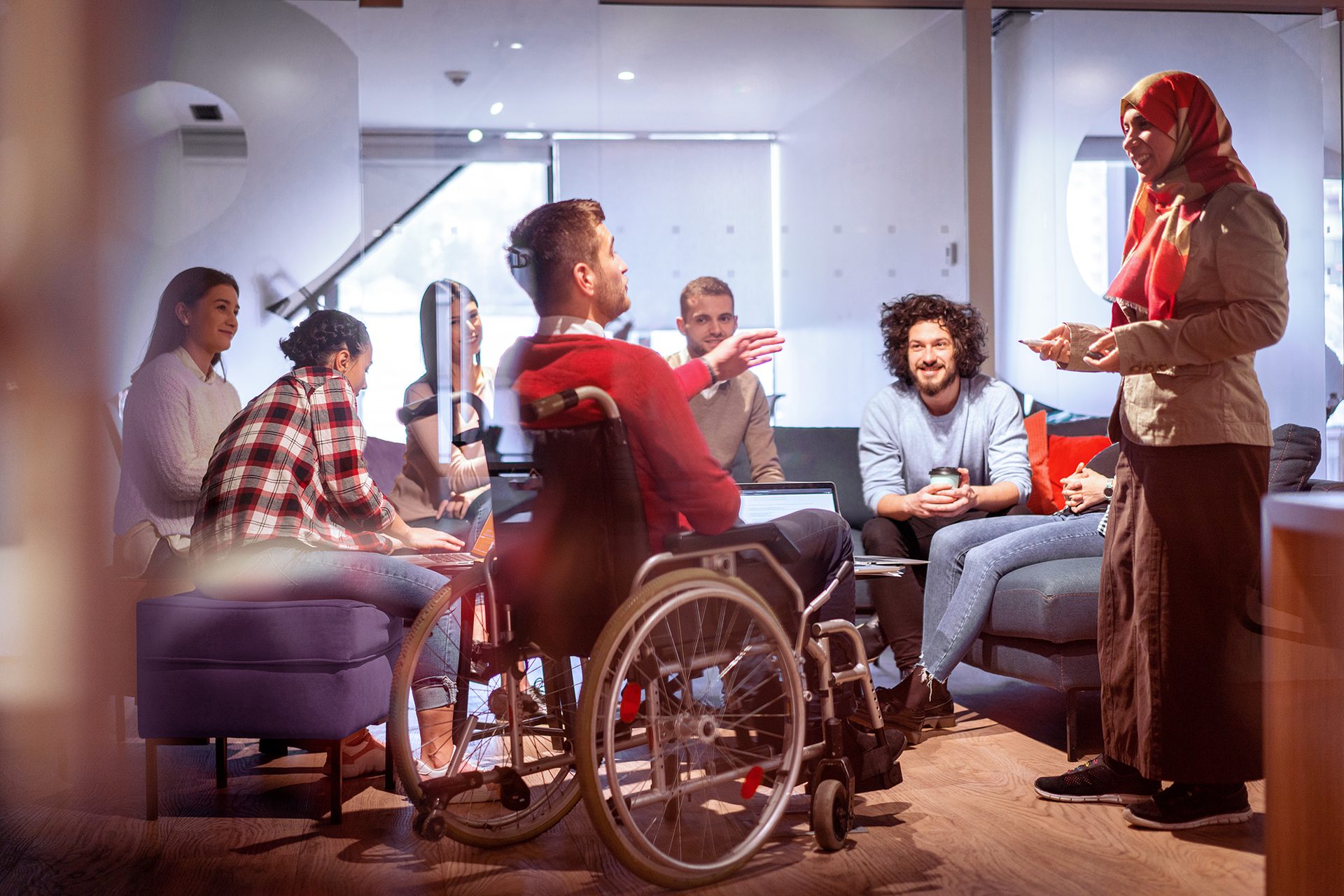
Last year, Lenovo created its Responsible AI Committee—a group of 20 people with diverse backgrounds, drawn from across the company—that focuses on six “pillars” of responsibility: diversity and inclusion; privacy and security; accountability and reliability; explainability; transparency, and environmental and social impact. Teams building or using AI products must register their intentions with the committee, which then evaluates their progress or request and either grants approval or asks for further refinements. “Our job isn’t to stop the product from going out, but to ensure it’s successful,” says Mr Fisher.
Subheader lorem ipsum dolor sit amet consectetur
Subheader lorem ipsum dolor sit amet consectetur
Increasingly, consumers are demanding this responsible deployment. Between lawsuits over copyrighted training data and reports of data leakage, privacy violations, and criminal instructions, customers are growing leery of the technology. Lenovo is responding to these concerns. “We want to make sure that everything we do is fair, transparent, explainable, and efficient,” says Doug Fisher, Lenovo’s chief security and AI officer. “And it doesn’t matter who you are.” The company has created an internal audit committee, paid external commitments, and has publicly pledged to build “AI for all.”
Last year, Lenovo created its Responsible AI Committee—a group of 20 people with diverse backgrounds, drawn from across the company—that focuses on six “pillars” of responsibility: diversity and inclusion; privacy and security; accountability and reliability; explainability; transparency, and environmental and social impact. Teams building or using AI products must register their intentions with the committee, which then evaluates their progress or request and either grants approval or asks for further refinements. “Our job isn’t to stop the product from going out, but to ensure it’s successful,” says Mr Fisher.
Subheader lorem ipsum dolor sit amet consectetur

Lenovo is taking a similar approach to privacy and security, drawing on policies already in place for more than a decade. “We want to make sure whatever data we collect is applicable, minimal, purposeful, and legitimate,” says Mr Fisher. The industry’s mad scramble for training data complicates—but doesn’t obviate—this commitment. While GenAI itself offers countermeasures for AI-generated threats such as prompt injection and deepfakes, ultimate responsibility lies with employees and a firm’s culture of accountability. “We want to ensure everyone is responsible for safety,” he says. And that relies more on training and processes than new technology.
“
Part of being responsible is asking who’s using this and how,”
Doug Fisher
Chief security and AI officer
Lenovo
Concerns about diversity and inclusion, for instance, are just as likely to focus on users of the product, and those affected by it, as they are on biassed training data. Bias is a well-known weakness of GenAI, one which can be addressed by retraining on more diverse data sets. But mitigating downstream risks from the use (and misuse) of such tools by their intended (and unintended) audiences requires more care and forethought. “Part of being responsible is asking who’s using this and how,” says Mr Fisher. “That’s a feedback loop we’re incorporating into our product lifecycle.”
These examples, along with similar principles to build transparent and explainable systems able to trace their decisions and reasoning, are necessary but not sufficient for building a broader commitment to building responsible AI. To this end, Lenovo is working with NGOs such as the World Economic Forum’s AI Governance Alliance to promote its principles, as well as pledging to Canada and other governments to uphold the same. Once again, these resolutions are not only ethical, but practical—by voluntarily subjecting its products to stricter scrutiny now, Lenovo hopes to conform to the emerging patchwork of global regulations, led by the European Union’s AI Act.
“It’s not just signing a document, but demonstrating our commitment. There are mechanisms in place ensuring that, all the way from helping drive the education requirement to potentially changing regulations,” Mr Fisher says.

Most important may be the company’s promise to create “AI for all,” one example of which is its groundbreaking real-time translation for Brazilian sign language, known as Libras. With 2.3 million deaf- or hearing-impaired Brazilians—and 430 million people around the world—such tools have immense potential to connect underserved communities. Because it’s one thing to hold ourselves accountable, rather than our computers. It’s another to decide to act.