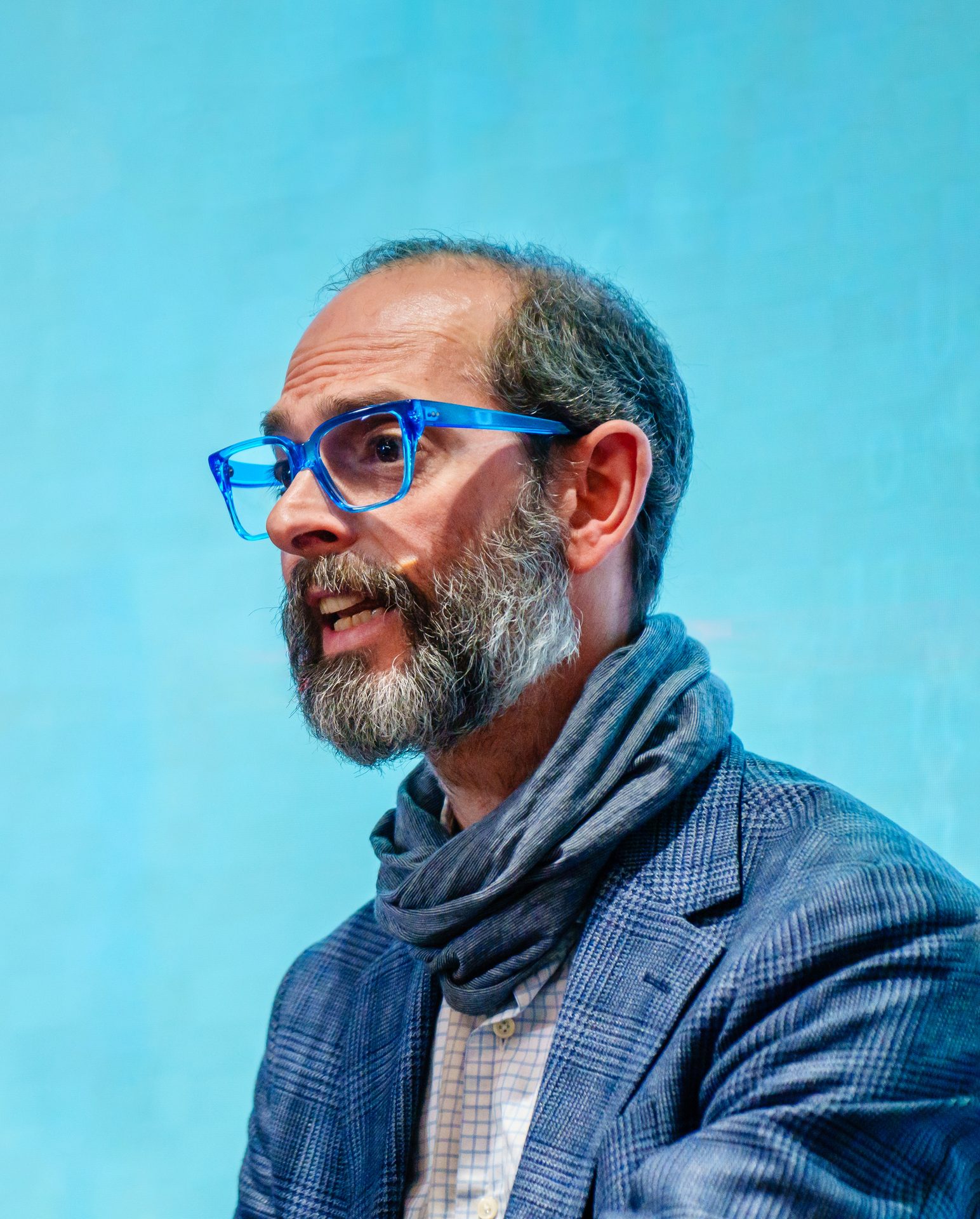

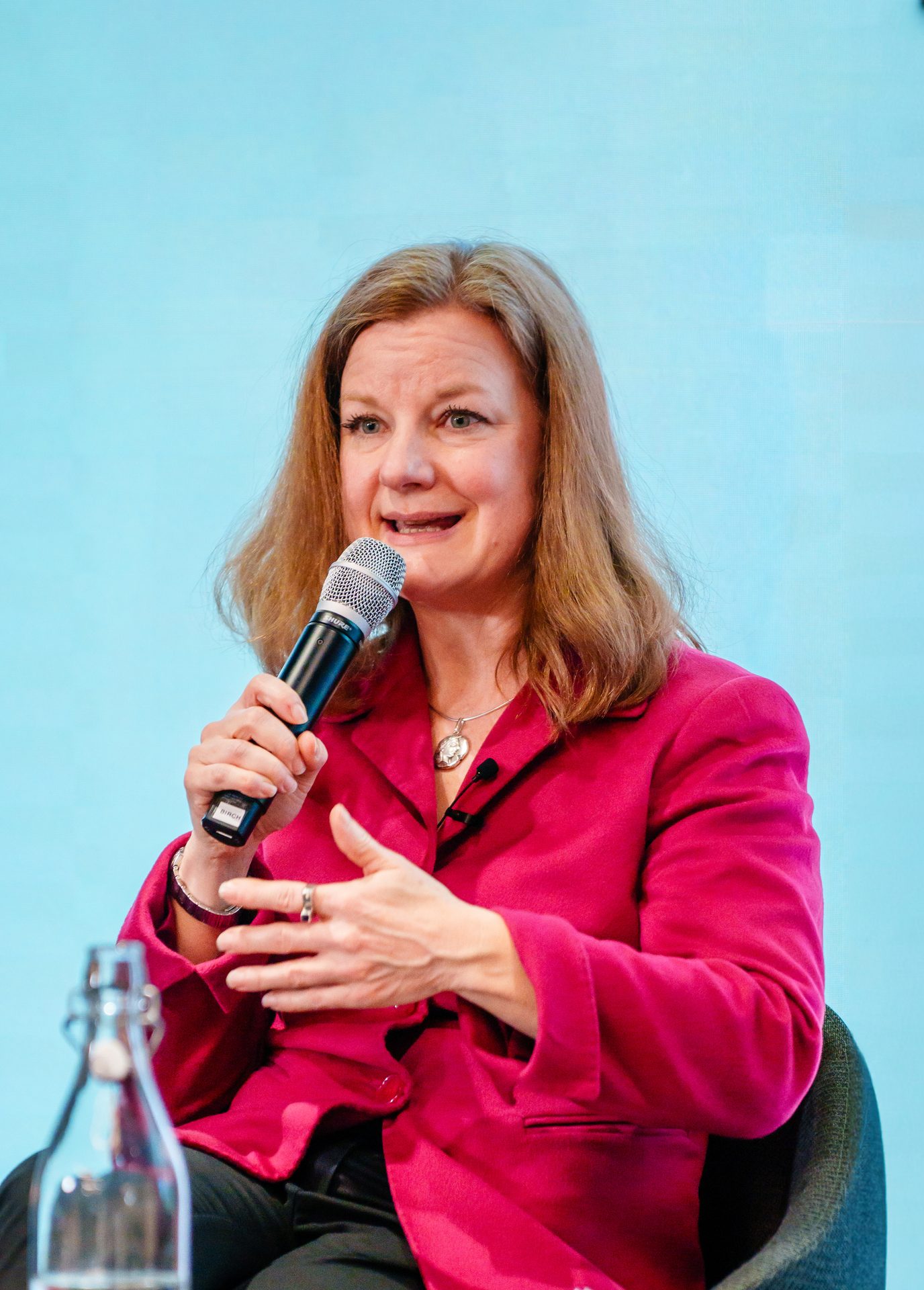
Dr Jean Innes
CEO
The Alan Turing Institute
The generative AI revolution has ushered in a new era of work, with the interplay between humans and technology reshaping our perceptions of productivity, job roles, and the essence and purpose of work itself. Can we leverage AI to augment human capabilities while safeguarding jobs, values and autonomy? Understanding where AI complements and where it substitutes human efforts is crucial to navigating this uncertain new chapter.
At “AI-human equilibrium: generating value and synergy with AI”, an event sponsored by Accenture, an expert panel recently discussed how to develop and implement AI while simultaneously empowering and protecting its users, and what this means for workers’ relationships with AI.
Although AI’s performance trajectory and impact remains full of uncertainty, few can afford to ignore it. “The most important factor for successfully adopting AI is having a leader who is open to it, even if they don’t necessarily deeply understand it,” says Jean Innes, CEO of the Alan Turing Institute. Investing in AI requires upskilling the broader workforce and training workers as citizen data scientists in order for the full employee base to be able to unlock AI’s benefits.
Technology leaders, such as Amazon, have long promoted automation and machine learning to drive business improvement, but most firms have legacy systems that are only tentatively adopting AI. Skilled workers are key to building and developing AI systems, yet these represent just a small fraction of the labour force; the UK’s AI industry currently employs 50,000 people, but the number of workers who use and benefit from its products and services is many times greater.
Dr Jean Innes
CEO of The Alan Turing Institute

Dr Jean Innes
CEO of The Alan Turing Institute
An estimated 44% of workers' skills are set to be disrupted by AI in the next five years, according to the World Economic Forum. Panellists at the event reject “doom and gloom” predictions that this will lead to job losses. Instead, they point out how the workforce has seen such disruptions by new technology before; according to a report by Goldman Sachs, 60% of workers are in jobs that did not exist in 1940. “The reality is that, similar to the agricultural, industrial and computer revolutions before, jobs will change as we use technology to fix the inefficiencies and problems that we have,” says Lee Fulmer, chairman of the reporting and data standards transformation board at the Bank of England.

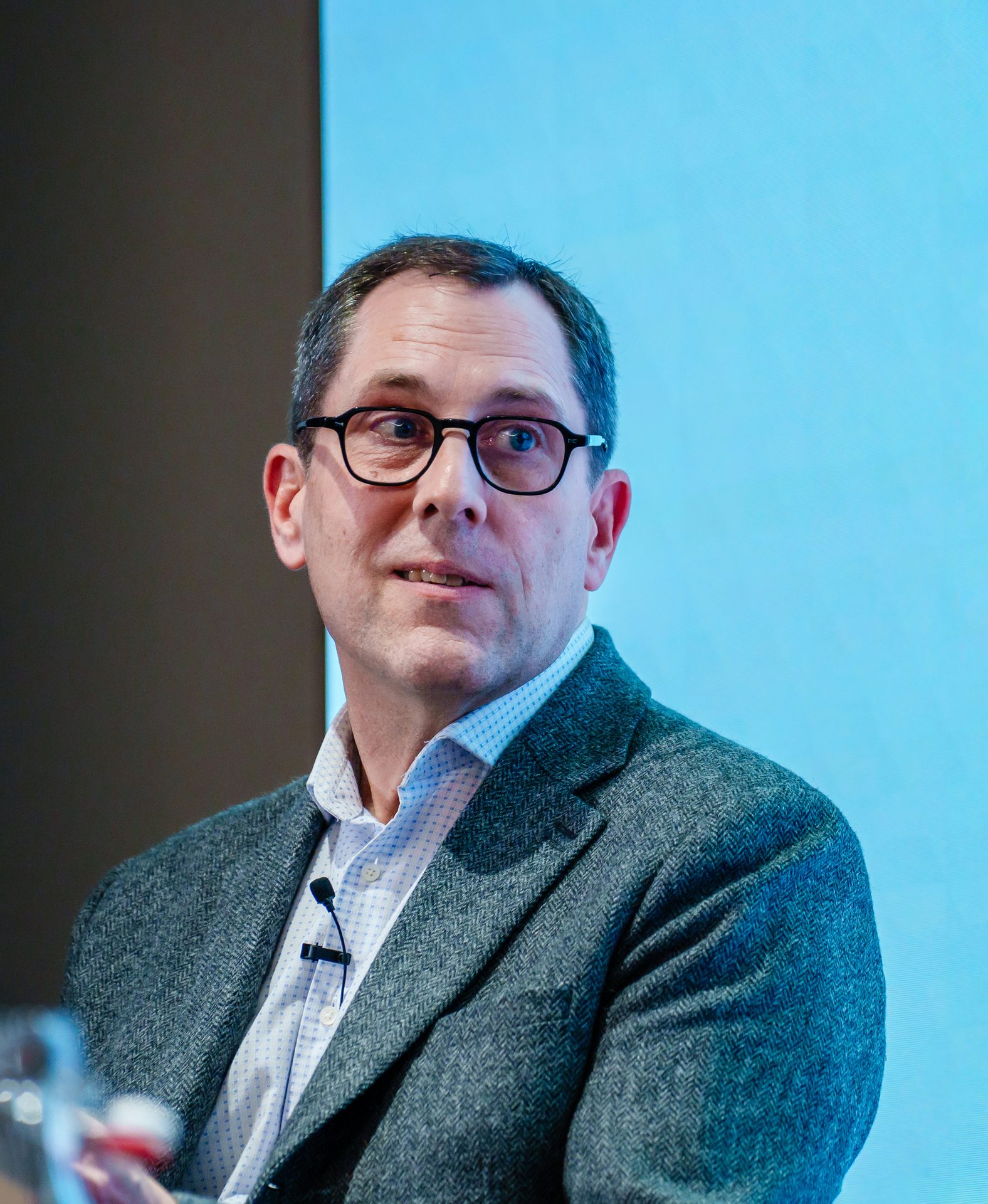
Lee Fulmer
Chairman of the reporting and data standards transformation board at the Bank of England
AI will augment our capabilities and free us up to perform higher-value work. “The whole point is to do more with less,” points out Fernando Lucini, global lead for data science and machine learning at Accenture. In the past, AI usage required large teams to manually check for false positives, for instance, a process that is highly labour-intensive. As AI capacities improve, more of this repetitive fact-checking can be automated, enabling a better balance with the genuine need for human intellect and insights.
AI thus vastly improves the efficiency of knowledge work and discovery at a time when the quantity of data and information has become overwhelming. “We'll see a shift towards human-centric AI, where we use it like a gold pan,” predicts Mr Fulmer. “Just as the gold pan allowed people in the 1800s to sift through silt and find nuggets more efficiently, AI has the ability to help us sift through vast amounts of information and data, directing us to the things that could be insightful, useful or impactful to us.”
A prime example is the Alan Turing Institute’s “Project Bluebird” initiative, working with NATS, the UK’s air traffic control service, to deliver the world’s first AI system to control a section of airspace. This system aims to improve decision-making efficiency for air traffic controllers, whose jobs are high-intensity and involve making safety-critical decisions.
“Air traffic controllers are incredibly talented – what they do with maths, judgement and instinct is awe-inspiring,” observes Dr Innes. “The systems we are developing crunch immense data and spot patterns even the smartest human controller can’t see, in order to support their decisions. This is an example of human-AI augmentation of capabilities.”
The applications for AI in the workforce will be as wide and complex as human creativity itself, used across sectors and requiring a diversity of skills. “We can't assume that being good at constructing ChatGPT queries makes someone a data/AI engineer, behavioural scientist or critical thinker,” explains Wendy Redshaw, chief digital information officer at NatWest Group. “The required skill sets will be much broader.”
Fernando Lucini
Global lead for data science and machine learning at Accenture


Wendy Redshaw
Chief digital information officer at NatWest Group
People with a wider range of skills and backgrounds will now be able to interact with AI. For example, accurate, effective prompts will not come from technology specialists alone, but also from those with a broad understanding of language and human contexts. “The best prompt engineers I've encountered are often history majors, researchers, business analysts – people with literature backgrounds who can feed information appealing to the bulk of the population,” says Mr Fulmer.
Diverse skill sets will be as crucial in an AI-supported workforce as in any other. As AI becomes more commonplace, people are addressing it in a different way, even more so as “AI natives” emerge – the young generation who have spent all their working lives using models such as ChatGPT. “These incoming AI natives will innately develop mental strategies for prompting and framing problems for AIs to solve in ways we now have to teach,” says Mr Lucini. “It’s a pivotal shift on the horizon.”

Fernando Lucini
Global lead for data science and machine learning at Accenture
Putting in place the right education strategies now is key to ensuring that the next generation takes AI capability to its fullest potential and keeps humans in command of its future. “Simply using AI versus truly understanding how it works and questioning it are separate skills,” insists Ms Redshaw. “We need to encourage our children and ourselves to still think outside the box, step back, and question what is being presented. We can’t fully hand over reasoning to these models without careful scrutiny.”
AI-human equilibrium: generating value and synergy with AI” took place on Thursday, February 29th in London. The salon welcomed 4 industry leader speakers and over 45 delegates.
The event sought to address questions including:
AI-human equilibrium: generating value and synergy with AI